
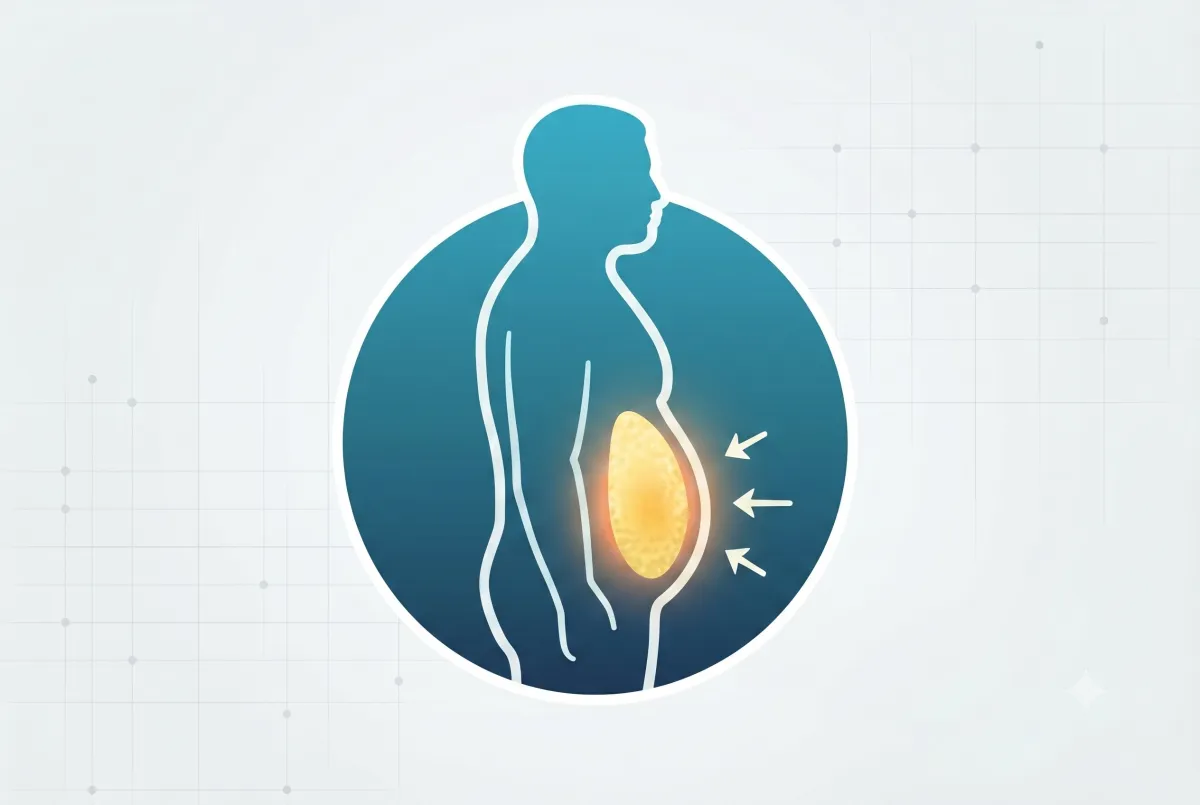
Insulin resistance in men - the overlooked driver of weight gain and hormonal decline
Most men over forty have been told their blood sugar is fine. Their fasting glucose came back within range, maybe their HbA1c is on the lower side, and the conversation ended there. What that test misses is one of the most clinically important metabolic shifts that happens in adult men - and one of the most modifiable.
Insulin resistance is not the same as diabetes. It is what happens before diabetes, often for many years. And while it is silent in the early stages, it drives a remarkable amount of what shows up later as weight that won't shift, energy that won't return, and hormonal patterns that look strange on paper.
What insulin actually does
When you eat carbohydrate, glucose rises in your bloodstream. Your pancreas releases insulin, which tells cells throughout your body to absorb that glucose and either use it or store it. The system is elegant and, when working properly, fast.
Insulin resistance is what happens when cells start responding less efficiently to that signal. Your pancreas compensates by producing more insulin - sometimes much more - to get the same job done. Glucose levels can stay normal for years while insulin levels climb. Standard tests that look only at glucose don't see this happening.
Why this matters for men, specifically
Insulin is not just a glucose regulator. It is a hormone with effects across multiple systems. Persistently elevated insulin contributes to:
Increased fat storage, particularly around the abdomen
Reduced SHBG, which changes how active hormones behave in the body
Increased aromatase activity, which converts active hormones to oestradiol
Chronic low-grade inflammation
Mitochondrial dysfunction
Endothelial dysfunction (which affects circulation and erectile function)
That list is doing a lot of work in the background of a man's clinical picture. Someone who has been quietly insulin-resistant for ten years is dealing with a hormonal and metabolic environment that is materially different from the one they had at thirty - and often the symptoms they're noticing are downstream of this shift.
How insulin resistance actually shows up
The earliest signs are subtle. Increased difficulty losing weight, even at the same level of effort that used to work. A sense that energy crashes harder after carbohydrate-heavy meals. Stubborn fat around the midsection that doesn't respond to general fitness work. A creeping increase in fasting blood pressure or triglycerides.
Later, as the picture progresses: cognitive cloudiness after meals, increased hunger between meals, sleep that doesn't restore as it should, and the hormonal patterns mentioned above - lower free hormone levels, higher oestradiol, lower SHBG.
Many men with these symptoms have been told they're fine because their fasting glucose is normal. They are not fine. They are early in a metabolic process that, if it continues, will eventually become diabetes - but more importantly, is already shaping how they feel and function now.
How to actually measure it
The single most useful test is fasting insulin alongside fasting glucose, which lets you calculate HOMA-IR (Homeostatic Model Assessment of Insulin Resistance). HOMA-IR is a derived number that gives a reasonable picture of insulin sensitivity. It is straightforward to order, inexpensive, and tells you something fasting glucose alone cannot.
A more comprehensive panel adds:
HbA1c (average glucose over ~3 months)
Fasting C-peptide (another measure of insulin output)
Triglycerides and HDL cholesterol (the triglyceride/HDL ratio is one of the best surrogate markers for insulin resistance)
hs-CRP (inflammation marker often elevated alongside insulin resistance)
This kind of panel costs little more than a basic check and tells you something genuinely useful.
What changes when insulin resistance is addressed
The hopeful part of this picture is that insulin resistance is one of the most reversible metabolic conditions in adult medicine. The drivers are well understood and the interventions that work are accessible.
In approximate order of impact:
Resistance training - increases glucose uptake by muscle independently of insulin
Reducing visceral fat, even modestly
Improving sleep quality and duration
Reducing alcohol intake
Carbohydrate quality and timing
Specific pharmacological interventions, where clinically indicated
The first four are foundational and work for almost everyone. The fifth - what you eat and when - has more individual variation than the headlines suggest. The sixth is a clinical conversation, not a self-treatment decision.
Why this conversation rarely happens
The reason insulin resistance is so under-investigated in routine practice is mostly historical. The standard panels were designed to identify diabetes, not to characterise the metabolic gradient that leads to it. Fasting glucose became the standard not because it is the most sensitive marker, but because it is cheap and reliable enough to use at population scale.
If you've ever been told 'your blood sugar is fine' while feeling that something metabolic is genuinely off, this is often what's going on. The test answered a different question than the one you actually have.
A reasonable next step
A more complete metabolic panel is a small ask and tells you something most standard panels don't. If the picture is normal, you have useful reassurance. If the picture shows insulin resistance, you have one of the highest-leverage health discoveries you can make in your forties - because the interventions that work are accessible and the downstream effects of addressing it tend to be larger than men expect.
This is the kind of thing worth knowing.