
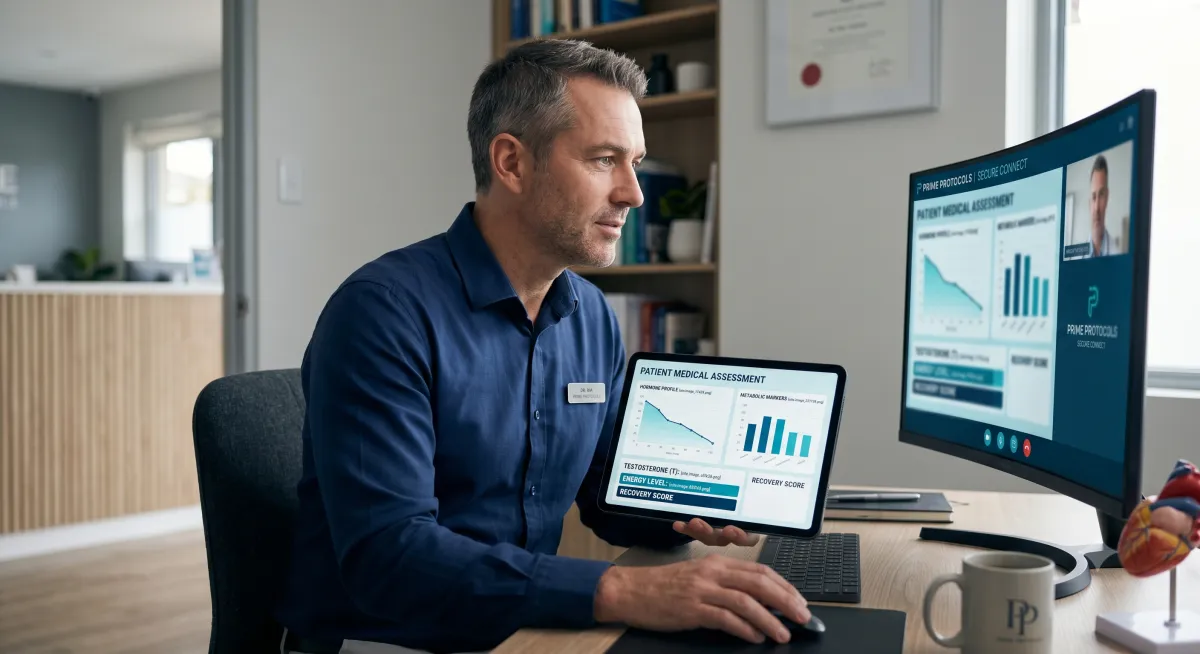
What happens at a Prime Protocols telehealth consultation
Telehealth is increasingly normal in Australia but specialist men's health telehealth is still relatively new for most people. This article is a straightforward walk-through of what the process looks like, so you arrive prepared rather than wondering what the process actually involves.
Before the consultation
Once you book, you'll be sent a structured medical intake to complete in advance. This is more comprehensive than a typical GP intake - it covers symptoms, history, current medications, lifestyle factors, and the specific clinical questions you'd like the consultation to address. Your doctor reads this before your appointment.
The intake is also your first chance to flag anything that should be on the agenda. We recommend taking the time to complete it thoughtfully. The consultation goes much further when the doctor has the full picture going in.
The consultation itself
The first consultation is typically 30 to 45 minutes, conducted via secure video. You won't need any specialist software - a browser link is sent before the appointment.
The structure is straightforward: the doctor reviews your intake with you, asks clarifying questions, and works through the specific clinical picture. You'll have time to ask everything you want answered - there's no time-pressure feel to it.
By the end of the first consultation, you'll usually have:
A clearer understanding of what is and isn't likely to be going on clinically
A pathology plan - what to test and why
An agreed next step, including timing of the follow-up
Pathology
We arrange comprehensive pathology that goes beyond a standard GP panel. This is the step where we actually see the biology - and most of the clinical decisions come from reading those results in context.
You'll be given a pathology referral and instructions for completing the bloodwork at a collection centre near you. Most pathology providers across Australia can run the relevant panels. Turnaround is typically 2 to 5 business days.
Follow-up consultation
Once results are in, your follow-up is scheduled. This is usually where the substantive treatment conversation happens, because now there is actual data to work with.
Your doctor will walk through the results with you in context. The point isn't to read out numbers - the point is to explain what the picture is showing and what it means clinically. From there, treatment options are discussed if treatment is clinically indicated.
If treatment proceeds, you'll receive a written treatment plan covering the protocol, the monitoring schedule, and the agreed review intervals.
Ongoing care
Most protocols include reviews at clinically appropriate intervals - typically 3-months initially, then less frequently as the picture stabilises. Reviews include repeat pathology where indicated and a clinical conversation about progress and any adjustments.
You also have access to your clinical team for questions between scheduled appointments. The model is designed to support continuity of care, not transactional appointments.
A note on what telehealth doesn't replace
There are clinical scenarios where in-person assessment is recommended or required. Where these arise, your doctor will say so directly. We are not trying to make telehealth do something it shouldn't do - we are trying to make it do exceptionally well the things it can do.
Most men's health assessment work falls comfortably in scope: clinical history, symptom interpretation, pathology review, treatment planning, and ongoing monitoring. The model is designed around what works clinically, not around the medium.
What to have ready before booking
Three things, none mandatory but all helpful:
Any previous pathology results from the last 12–24 months
A list of current medications and supplements
A clear sense of what you want the consultation to address
The third is the most useful. If you arrive with one or two specific clinical questions, the consultation can dig into them properly. If you arrive looking for general guidance, the doctor will help you focus - but the consultation goes further when you've already done that thinking.
The booking system handles everything else. The medicine is the work.